


The Daypack That Got a Hiker Through a Night on Broken Hand Pass
A single wrong step on loose rock can change everything in the high country, and one Colorado hiker learned that firsthand while wrapping up a big day in the Sangre de Cristo Mountains. What kept a bad situation from becoming a fatal one had less to do with luck and more to do with what she chose to stuff into her pack that morning.
- An experienced hiker injured her knee about 400 feet below the saddle of 12,585-foot Broken Hand Pass and faced a 13-hour rescue.
- Two volunteer teams sent 24 responders, a helicopter, and a technical rope system to bring her down through the dark.
- Warm layers, a headlamp, a bivy sack, a satellite communicator, and a charged phone all played a part in her survival.
A Routine Day Trip That Went Sideways
On July 12, the hiker had already summited two peaks and finished a high-alpine traverse. She was on her way out when she hurt her knee on loose rock below the pass. That’s a hard place to be stuck. Broken Hand Pass sits high in Colorado’s Sangre de Cristo range, and the terrain around it is steep and chossy, the kind of ground that shifts under your boots without warning.
She called Custer County Search and Rescue at 4:45 P.M. and got lucky in one big way. She happened to be standing in a spot with cell service, which is far from guaranteed in that country. That single break let her talk directly with rescuers instead of waiting blind. One responder made the point that nobody controls what happens in the backcountry, and a rock can shift under a foot at any moment.
Why the Rescue Took So Long
A Flight For Life Colorado helicopter flew four technical team members and 125 pounds of gear to the area in about five minutes. That same trip by road would have taken close to two hours on a rough four-wheel-drive track. The aircraft saved time and spared rescuers from hauling heavy packs across miles of rugged ground.
In total, 19 Custer County members and five from CCSAR responded. Ground crews hiked roughly two miles from the parking area to reach her. Moving someone who can’t walk through that kind of terrain is tough in daylight and tougher in the dark, and nearly the entire operation happened at night. Teams built a technical rope system to lower her in a litter, working carefully by headlamp. The mission finally wrapped at 6 A.M., more than 13 hours after her first call.
The Gear That Actually Mattered
This is the part worth paying attention to. She had planned only a day trip, yet she packed like someone who expected the unexpected. That decision carried her through the night.
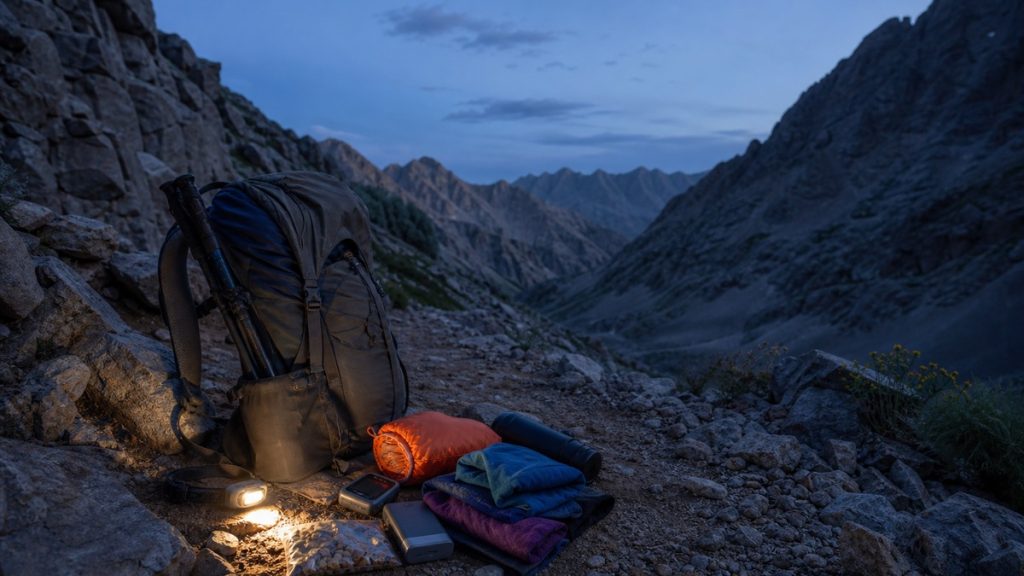
Her headlamp turned out to be one of the most valuable things she carried. Rescuers spotted her because she kept it on and could signal with it, and she could see the crews coming because their lights were on too. Warm, brightly colored layers kept her from freezing and made her easier to see from the air. An emergency bivy sack gave her a barrier against the cold and wind while she waited.
Her phone let her stay in contact, and an external battery bank kept it alive, which mattered a lot once she realized she had a signal to use. A Garmin inReach satellite communicator let her send GPS coordinates and served as a backup if the phone died. A climbing helmet protected her head on a pass known for rockfall. And extra food and water sustained her across the long ordeal.
Summer Cold Is a Real Threat
The night was clear and calm, with wildfire smoke drifting in from nearby burns, but temperatures still dropped into the upper forties despite it being mid-July. Even the rescuers felt it. One responder said she wore every layer in her pack plus a beanie, and still had to fight the chill that sets in the moment you stop moving.
That’s the lesson that sticks. You could be two miles from the trailhead, but if you can’t walk, help may be hours away, and the cold does not care what the calendar says. Preparation isn’t only for beginners. Packing a few extra layers and a way to signal for help costs you almost nothing on the days when everything goes right, and it can save your life on the one day it doesn’t.
Pack Like the Weather Might Turn on You
The takeaway from Broken Hand Pass is simple enough to act on before your next outing. Treat every day hike in the alpine like it could turn into an overnight one. Carry light, warmth, a way to call out, and a way to be seen. Those small items rarely feel necessary until the moment they’re the only thing standing between a scary story and a tragic one.
