

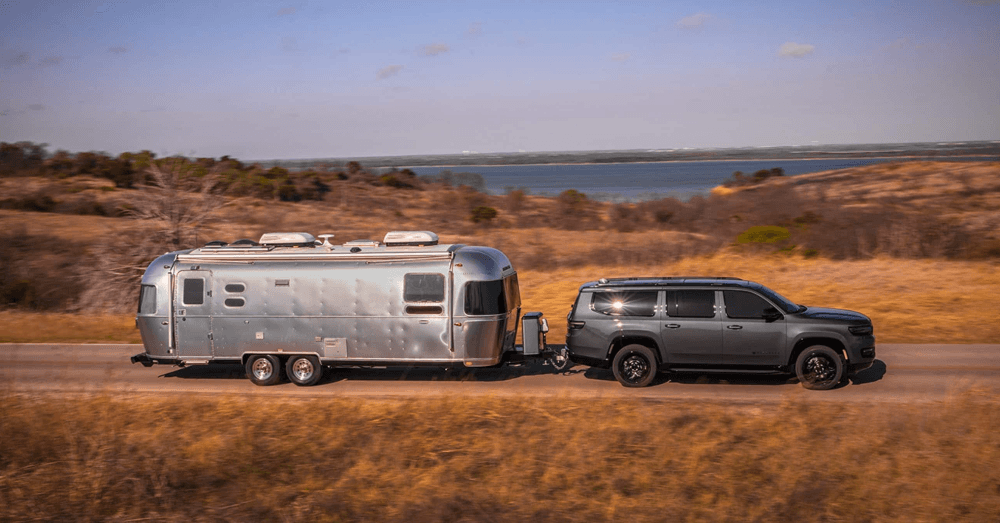
What Your Vehicle’s Towing Capacity Can Actually Haul
That number on the spec sheet looks impressive until you start asking what it really means. A 10,000-pound rating sounds like you can hitch up just about anything with wheels, but the reality is a lot more nuanced. Knowing what your vehicle can safely pull involves more than glancing at the brochure, and getting it wrong can wreck your truck, your trailer, or your weekend.
- Manufacturer tow ratings usually assume just a driver and an empty cabin, so passengers and gear cut into the limit.
- Most experts recommend staying around 80% of the rated maximum to leave room for hills, wind, and braking.
- Hitch class, payload, and tongue weight all matter as much as the headline tow number.
What That Tow Rating Really Tells You
Your vehicle’s towing capacity is the maximum amount of weight it can safely pull, which changes based on how it’s configured, how much weight it’s already carrying, and how you distribute and control the load behind you. The catch is in the fine print. Manufacturers publish a tow rating for each vehicle they build, but those calculations typically assume the vehicle is carrying only a driver. If you plan to tow a travel trailer and bring along your family with all the gear for a weekend away, the manufacturer’s math won’t be accurate for your trip.
Add four passengers, a cooler, two bikes, and a full tank of fuel, and you’ve already eaten into the numbers before the trailer even shows up.
The Numbers Behind the Number
Towing involves a stack of acronyms, but a few really matter. Your Gross Combined Weight Rating is the maximum weight of your loaded vehicle and the trailer together. This rating includes all cargo, including anything loaded onto the trailer. Think of it as the cap on what your vehicle can carry and tow at the same time.
Then there’s payload. You can find your truck’s payload capacity in the owner’s manual, or calculate it by subtracting the curb weight from the GVWR. If your truck’s GVWR is 9,000 pounds and it weighs 5,000 pounds empty, your payload capacity is 4,000 pounds. Remember, payload includes everyone in the cab plus the trailer’s tongue weight pressing down on the hitch.
Speaking of tongue weight, it should land between 10 and 15% of the total trailer weight. Measuring tongue weight matters because it keeps your trailer loaded properly for proper vehicle handling and steering. Too little weight up front and the trailer sways. Too much and you overload the rear axle.
What Different Vehicles Can Actually Pull
Tow ratings vary wildly based on body style, engine, axle ratio, and equipment. Depending on configuration, a half-ton pickup (1500-class) may be able to tow around 10,000 pounds. Many 1500s are rated for 12,000 pounds or more when properly equipped. Heavy-duty three-quarter and one-ton trucks push well past that, especially with a fifth-wheel or gooseneck setup.
SUVs and crossovers tell a different story. Plenty of vans and SUVs can tow an RV, but it depends on the vehicle’s rating and the RV’s loaded weight. Midsize and full-size SUVs often handle small to mid-sized travel trailers or pop-up campers. Compact crossovers usually max out around 1,500 to 3,500 pounds, which covers a small utility trailer or a couple of jet skis but not much beyond that.
Hitch hardware sets its own ceiling. Trailer hitches are divided into five classes. Class I hitches can pull up to 2,000 pounds and generally withstand a tongue weight of 200 pounds. Class V units handle the heavy stuff above 10,000 pounds. The trailer is only as strong as the weakest link, so the hitch, ball mount, and pin all need to match the load.
Why the 80% Rule Saves Headaches
A common towing guideline says don’t exceed about 80% of your vehicle’s rated tow number. That margin helps account for miscalculations and variables like wind, hills, and braking distance. Pushing closer to the maximum doesn’t trigger any warning lights, either. If you use more than 80% of your truck’s rated capacity, you likely won’t know right away since most trucks won’t flag you with a notification. Instead, the damage happens behind the scenes and forces your engine to work harder than it should. That shortens engine life and can cause overheating.
Going over the line gets expensive fast. Exceeding your tow vehicle’s rating puts serious strain on the engine, transmission, brakes, suspension, frame, and other parts. It can lead to overheating, poor handling, longer stopping distances, and tire blowouts. You may also void your warranty or insurance coverage.
Hitch Up With Confidence
Before loading the trailer this weekend, pull out the owner’s manual, check the door jamb sticker, and run the math with real passenger and cargo weights instead of the manufacturer’s idealized numbers. Weigh the loaded trailer at a CAT scale if you’re close to the limit. The few minutes spent calculating now beats a roadside breakdown or a blown transmission later. Your truck can probably haul more than you think, but only when every link in the chain is rated to handle it.