

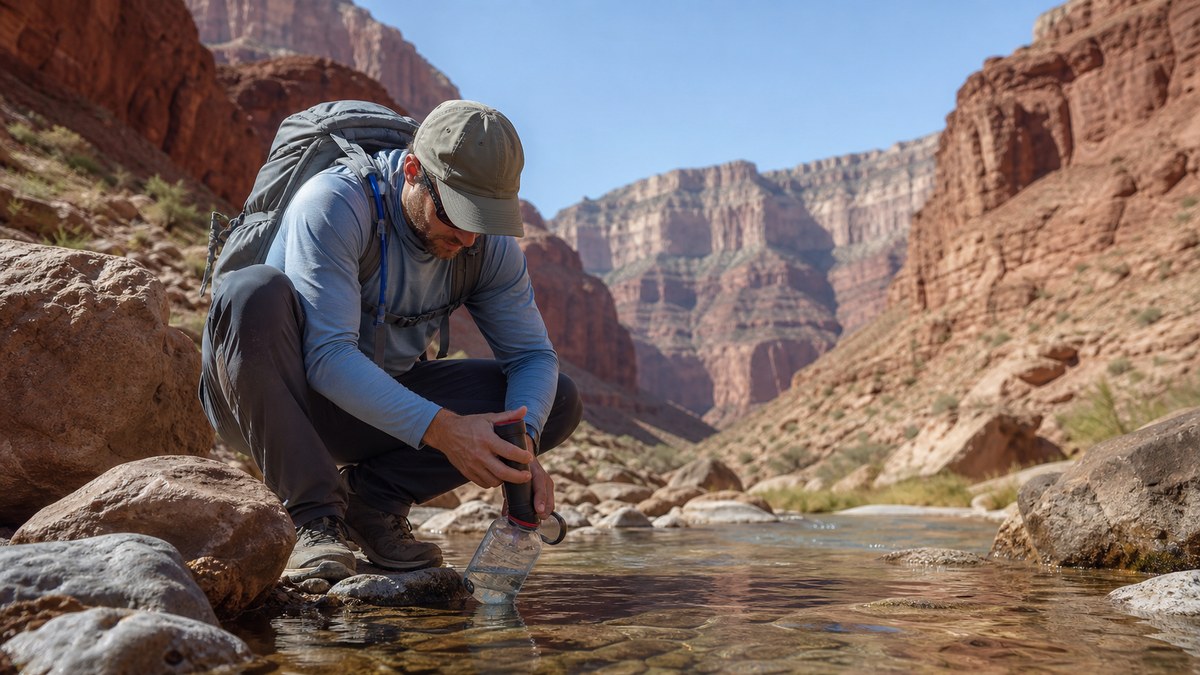
The Grand Canyon Water Fight That Should Make Every Backpacker Rethink Their Filter
A quiet regulatory vote in Arizona has put one of the most photographed water sources in the country under a new kind of scrutiny, and the ripple effects reach far past the canyon rim. If you drink from wild water anywhere, this story is worth your attention.
- Arizona raised the allowable arsenic level in a monitoring well near the Grand Canyon from 50 to 55 micrograms per liter.
- The EPA drinking water standard for arsenic is just 10 micrograms per liter because of cancer risk.
- Standard backpacking filters catch bacteria but do nothing to remove dissolved heavy metals like arsenic.
What Actually Happened Near the Canyon
On July 6, 2026, the Arizona Department of Environmental Quality voted to let the Pinyon Plain uranium mine raise the acceptable arsenic level in one of its monitoring wells. The number moved from 50 to 55 micrograms per liter. That may sound small, but the original ceiling was already five times the federal drinking water limit. The EPA caps arsenic in drinking water at 10 micrograms per liter, and for good reason. Long exposure has been linked to bladder, lung, skin, kidney, liver, and prostate cancers.
The Pinyon Plain Mine sits about seven miles south of Grand Canyon National Park. It was built in the eighties, covers 17 acres, and runs nearly 1,500 feet deep. The bigger concern is what lies beneath it. The mine sits on top of the Redwall-Muav aquifer, the sole water source for the Havasupai people and the origin of Havasu Creek. That creek feeds the famous turquoise waterfalls that draw as many as 40,000 visitors a year.
Why the Numbers Have People Worried
Monitoring wells work like early warning systems. Amber Reimondo, energy director for the Grand Canyon Trust, described them as the canaries in the coal mine. Arsenic increases first showed up in January 2025, and the well exceeded its permitted alert level four separate times. Critics argue that when alarms keep going off, the right response is a hard look at the cause, not raising the threshold so the alarms stop ringing.
State regulators see it differently. An ADEQ spokesperson said more than four and a half years of site data show the mine is not adding arsenic to the groundwater. Instead, they say the mineshaft creates a hydraulic sink that pulls naturally occurring arsenic from the surrounding rock toward the wells. Adjusting the limit, in their view, reflects that geological reality rather than new pollution.
Scientists remain cautious because the hydrology here is genuinely hard to map. Recent research using dye tracers showed water traveling long distances between the shallow Coconino aquifer and the deeper Redwall-Muav system, proving the two are connected in more places than once assumed. Water that gets contaminated at one point can move both sideways and down, which makes it tough to predict where trouble ends up. Federal reviews by the U.S. Geological Survey and the EPA concluded that more study is needed before anyone can say the site is safe.
The Lesson for Anyone Who Drinks Wild Water
Here is the part that matters whether you live near the canyon or thousands of miles away. Most hikers trust a pump or squeeze filter to make backcountry water safe. Those filters handle bacteria and protozoa well. They do almost nothing against dissolved heavy metals like arsenic, lead, or uranium. You can filter a liter until it looks crystal clear and still be drinking something that hurts you over time.
This is not only a Southwest issue. Old mining districts, industrial sites, and even natural rock formations can leach metals into streams across the country. Backpackers heading out from places like Muncie, IN often assume clean-looking water is safe water, and that assumption travels with them to bigger trips out West. The habit of checking the ground you walk over, not just the water in front of you, is a good one to build anywhere.
Simple Habits That Keep You Safer on the Trail
You do not need a chemistry degree to travel smarter. Learn the mining and industrial history of the areas you visit, since land agencies and local advocacy groups often publish water quality notes. When metals are a known risk, reverse osmosis or specialized filtration is the only reliable answer, and carrying enough water in from a trusted source often beats gambling on a questionable spring. Pay attention to signage, and treat posted warnings as real rather than bureaucratic noise.
The canyon fight is still unfolding, and the Havasupai and several conservation groups continue to push back. For the rest of us, the takeaway is quieter but useful. Water that looks pure can carry things no ordinary filter removes, so a little research before a trip protects you long after you have packed up and gone home.