

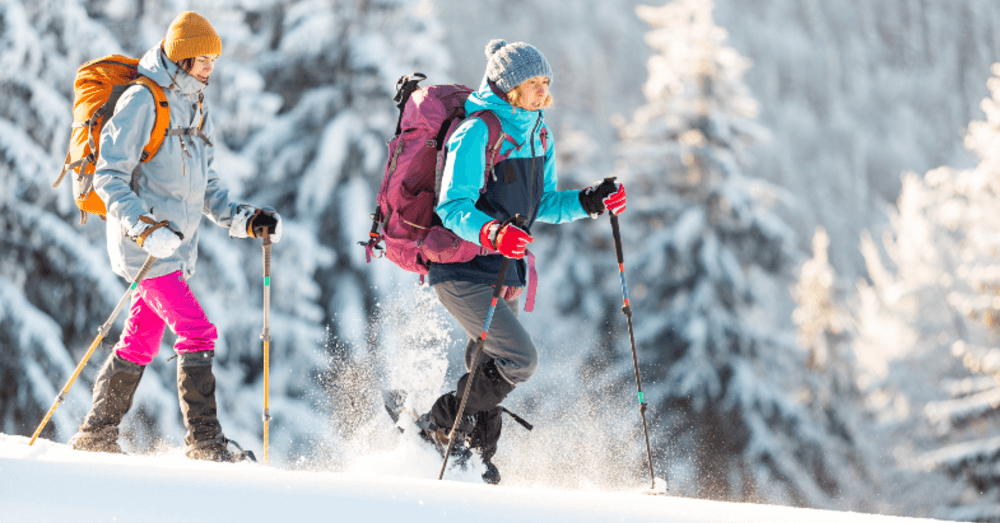
Turn Your Favorite Hiking Trails into Winter Adventures with Snowshoes
Have the hiking trails you love become covered in snow? These beginner snowshoeing tips could help you continue to enjoy the trails during the winter.
Getting started with snowshoeing is simpler than you think. You don’t need fancy gear or expert skills to turn your favorite summer hiking spots into winter adventures. Whether you’re looking at flat park trails or rolling forest paths, snowshoeing opens up a whole new season of outdoor time without the cost and complexity of skiing. Most people find they can handle their first snowshoe trip after just six inches of fresh snow, and the activity burns serious calories while staying low-impact on your joints. The key is starting on terrain you already know from warmer months and building up your winter confidence from there.
Should you rent or buy snowshoes?
When you’re choosing snowshoes for the first time, you should consider renting or borrowing a pair for the first time you go out. You may end up hating the experience of hiking in the snow, and you won’t be stuck with a pair of snowshoes that you’ll never use again. Keep in mind, the models that you rent or borrow might not fit you perfectly, which means you might be better off sticking to flat terrain snowshoeing during that first adventure. Use a snowshoe sizing guide to ensure you have some that are close to the right fit.
What should you consider when buying snowshoes?
Like anything else, one of the most important beginner snowshoeing tips is to find a product that fits you right. The sizing guide is a great place to begin. You need snowshoes that fit your height, weight, and shoe size. The terrain and snow conditions are also important. You’ll want to wear insulated, waterproof winter boots to ensure you’re comfortable in the winter weather while hiking on the snow-covered trails. It’s also a good idea to purchase a pair of adjustable poles to help with your stability on the trails.
Where should you go for your first few times snowshoeing?
If you have a backyard, that’s a great place to begin, but it will get boring in a hurry. A search for easy snowshoe trails near me should give you some great places to go that won’t be too difficult for your skill level. Like any other activity, you should start slowly and on flat ground and work up to taking on hills during your snowshoeing fun. Ensure you have all the winter hiking gear basics needed for a successful adventure on the snow. You can have a lot of fun, but like hiking, it’s important to be prepared in case of an injury.
How much snow do you need to go snowshoeing?
The most important of these beginner snowshoeing tips is to make sure you have enough snow on the ground for the activity. This means reading the snow conditions to safely and successfully enjoy this activity. You need at least six inches of snow on the ground to ensure you don’t damage the underlying vegetation or your equipment. The deeper the snow, the better it will be. When considering safety, it’s always a good idea to tell someone at home where you plan to go, how far, and how long you should be gone. You should also bring a buddy.
How do you get up once you’ve fallen?
When you’re on a hill and fall, you need to know how to get up so that you don’t break your equipment or yourself. Position your snowshoes across the hill, not downhill, and try to get on your knees, then step up. If you can’t do this, it might be easier to take the snowshoes off your feet, stand up, and then put them back on. The first few times you fall, this might be a better option for you.
Is snowshoeing a good activity for kids?
Snowshoeing is a great activity for all ages. Among the beginner snowshoeing tips is a recommendation that kids ages two and up can try this activity. Younger kids, or inexperienced adults who are just starting out, can enjoy shorter outings, while older kids might love to venture out and explore on more difficult trails. This is an activity that everyone in your family can enjoy.
Enjoy these beginner snowshoeing tips and get ready for some extra outdoor fun while the snow is on the ground. The world seems calmer and more peaceful when snow is on the ground, and you can add this activity to what you love to do during the winter season.